Guide
Why does my cat stare at me?
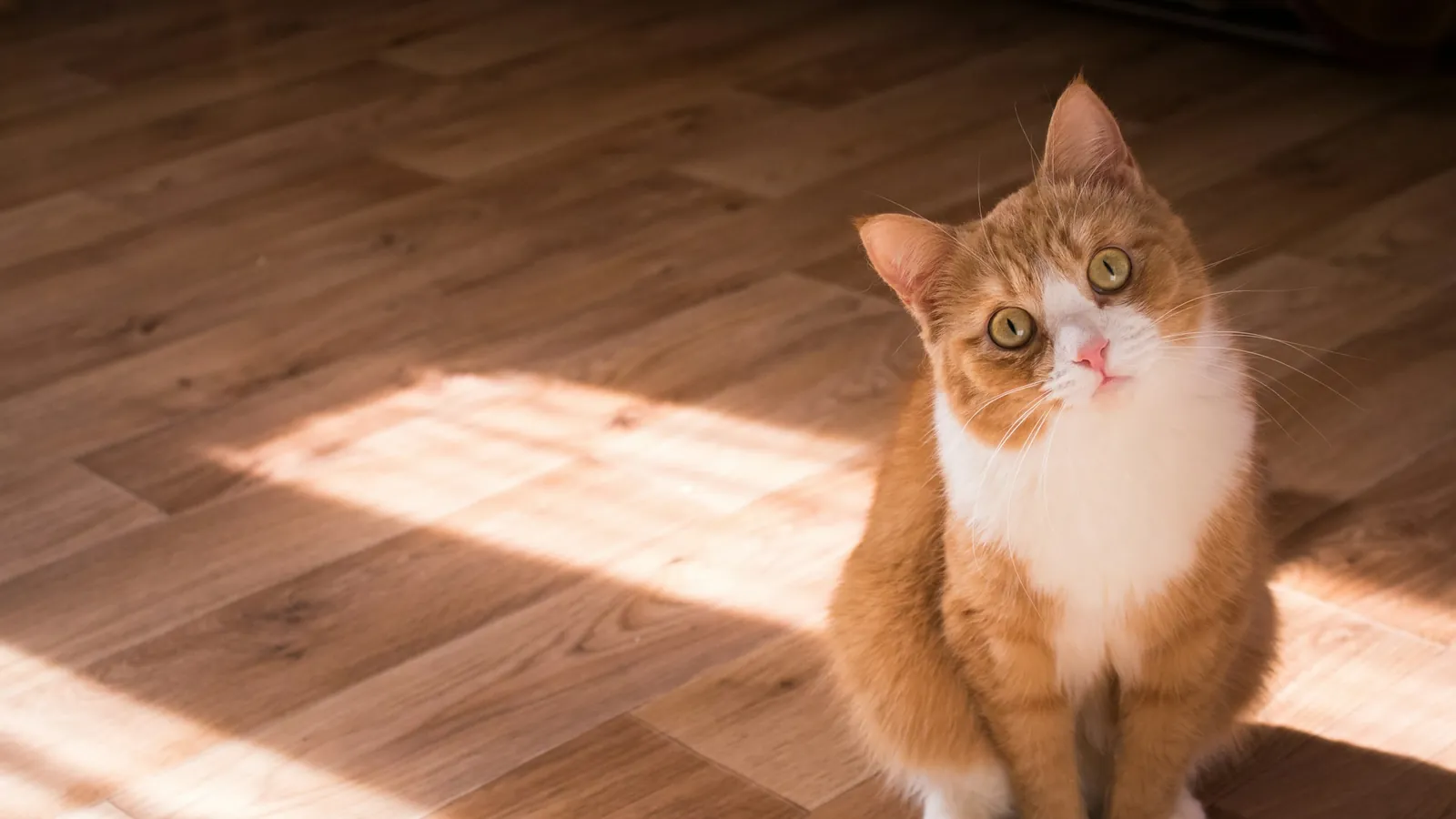
Why does my cat stare at me? If you've ever looked up from your phone to find two big eyes locked on you, you're in good company. The short version: it's almost always normal. Cats stare to ask for food, to get your attention, to say they trust you, or just to keep an eye on the most interesting thing in the room (you). Once in a while a stare means "back off," and in older cats a blank stare can be worth a vet check. Here are the 7 most common reasons, how to tell them apart, and what to do about each one.
Quick answer
Usually it's a good thing. Cats stare to ask for food or attention, to watch what you're doing, or to show trust, often with a slow blink. A hard, unblinking stare with a stiff body means "give me space." Call your vet if staring is new and comes with confusion, hiding, pain or other changes.
Why cats stare so much in the first place
Part of it is just how cats are built. Rover cites cat behavior scientist Dr. Mikel Delgado, who notes that cats blink only about two to five times a minute, compared to 15 to 20 times for people. So even a relaxed look from a cat can feel like a stare.
Cats are also visual hunters. Purina points out that indoors, the thing moving around the most is usually you. Watching you is how your cat keeps track of their world.
And a lot of it is learned. Cats Protection explains that if staring at you has ever led to dinner or a cuddle, your cat remembers. Every time it works, the habit gets stronger.
Why does my cat stare at me? 7 reasons
These come from PetMD (veterinary behaviorist Dr. Wailani Sung), Rover, Chewy, Purina and Cats Protection. The trick is to look at the rest of the body, not just the eyes.
1. They want food
The classic. PetMD and Purina both list hunger as a top reason. If the stare starts around mealtime, often near the bowl or the kitchen, you have your answer.
2. They want your attention
PetMD says an attention-seeking cat may stare, then slow blink, meow or rub on you. Chewy adds that a stare with a meow usually means "pay attention to me." Rover notes a cat may also stare when they need help, like a toy stuck under the couch, an empty water bowl or a litter box that needs scooping.
3. They love you
A soft gaze with heavy, half-closed eyelids is a happy, relaxed cat. Purina calls slow blinks "eye-kisses." Cats Protection says a slow blink means your cat loves and trusts you. (More on the slow blink below.)
4. They're curious
Chewy lists plain curiosity and observation. Young cats and cats new to your home tend to watch everything you do. You're cooking, folding laundry, typing. It's all fascinating.
5. They want to play (or they're in hunting mode)
PetMD describes the play stare: a crouch, big pupils and a swishing tail, followed by a sprint or a swat. Rover adds the hunting version, with wide pupils and a little rear-end wiggle. If it's aimed at your ankles, grab a wand toy.
6. They're scared or anxious
PetMD says a frightened cat may stare with big pupils, head lowered, ears back, body crouched and fur standing up. Purina adds a tucked tail and hiding. Certified cat behavior consultant Joey Lusvardi tells Adopt a Pet that a relaxed cat has thin, almond-shaped pupils, while an anxious one has wide, dilated pupils.
7. They're telling you to back off
A hard, unblinking stare with a stiff body is a warning. PetMD says it can come with raised fur and may turn into an attack if the other animal (or person) doesn't move away. Purina adds a puffed-up body and swishing tail to the picture.
The slow blink: how to say "I love you" back
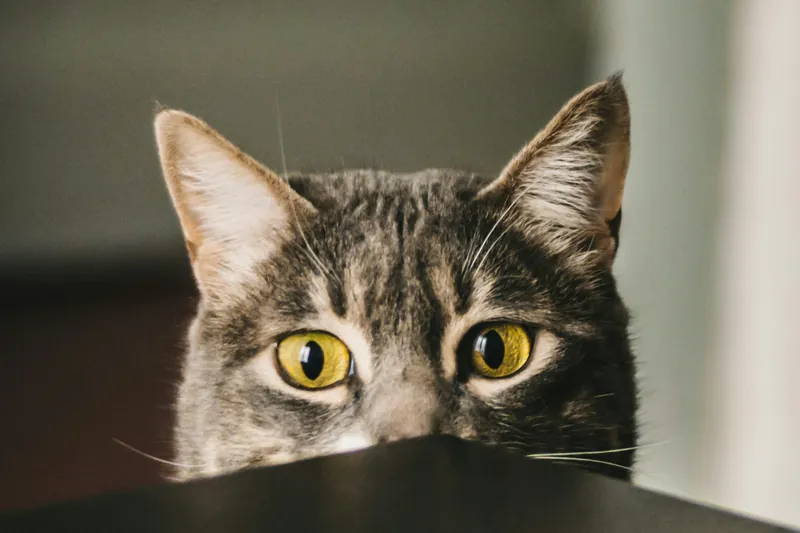
This is the fun part. A team at the University of Sussex and the University of Portsmouth tested the slow blink in two experiments, published in Scientific Reports. In the first, 21 cats from 14 homes were more likely to slow blink at their owner after the owner slow blinked at them. In the second, 24 more cats slow blinked back at a stranger who did it, and were more likely to walk up to the stranger's open hand.
The researchers think the slow blink may have started as a way to break up a stare, since an unbroken stare can feel threatening to a cat.
How to do it, per Professor Karen McComb at Sussex: narrow your eyes like you're giving a relaxed smile, then close them for a couple of seconds. Many cats will blink right back. Rover's Dr. Delgado calls it a "kitty smile."
What not to do: stare back hard. Chewy, Rover and Purina all say cats don't usually enjoy long, direct eye contact and may take it as a challenge. Look softly, blink, and let them come to you.
How to read the stare: a quick guide
| What you see | What it usually means | What to do |
|---|---|---|
| Soft eyes, slow blinks, relaxed body | Trust and affection | Slow blink back |
| Stare plus a meow, near the bowl | Food or attention | Check the bowl and the clock |
| Crouch, big pupils, tail swishing, wiggle | Play or hunting mode | Bring out a toy, not your hands |
| Ears back, crouched, tail tucked, hiding | Fear or anxiety | Look away, give space, find the trigger |
| Hard, unblinking stare, stiff body, raised fur | "Back off" | Look away, stay calm, move away slowly |
| Blank stare at walls or into space | Could be zoning out, or a health issue | Watch for other changes (see below) |
If your cat seems scared or upset, PetMD's advice is simple: look away, stay still, back off and keep at least 5 feet away. Don't pet or talk to them until they relax. Purina adds: never let your cat feel punished.
Why does my cat stare at me while I sleep?
Waking up to a cat on your chest, staring, is a rite of passage. Chewy's FAQ says it's normal and nothing to worry about. Your cat may be curious, keeping watch, following a routine or waiting for breakfast. If the 5am stare always ends at the food bowl, that's your clue.
Rover also points out that some cats nap with their eyes partly or even fully open, so a cat who looks like they're staring might actually be asleep.
One thing to watch in older cats: Cornell Feline Health Center lists loud, seemingly random crying in the middle of the night as a possible sign of cognitive dysfunction, and notes that night crying is also fairly common in cats with an overactive thyroid or high blood pressure. Worth mentioning to your vet if it's new.
When staring means call the vet
Most staring is just cat stuff. Cats Protection says it's usually nothing to worry about. But a few patterns are worth a vet visit, especially if they're new.
- Blank staring at walls or into space. Cornell lists "long periods of staring blankly into space or at walls" among the signs of cognitive dysfunction, which tends to show up clearly in cats 10 and older. Other signs include getting lost in familiar places, sleeping much more, losing interest in food or play, going outside the litter box, and crying at night. Rover adds that a fixed, vacant stare can also point to neurological problems, vision problems or an injury.
- Big pupils that stay big, or bumping into things. VCA lists sudden blindness and pupils that stay dilated among the signs of high blood pressure in cats, which is more common in older cats, usually alongside kidney or thyroid disease. Cats Protection says staring in older cats can be a sign of sight loss and to get them checked as soon as possible.
- Staring plus pain signs. Chewy's vet, Dr. Stephanie Howell, says staring along with hiding, limping, aggression or avoiding touch could mean it's time to call the vet. Rover adds that squinting can be a sign of pain.
- Staring plus confusion or yowling. Chewy lists a cat who seems disoriented or spaced out, or who cries or yowls while staring.
- Any staring that comes with other changes, like lethargy or behavior changes. PetMD and Rover both say to contact your vet.
Not sure? Purina's rule of thumb works well: if your cat is staring more than usual or their body language seems "off," book a vet visit to rule out a medical cause.
What to tell your sitter about the stare
Your sitter doesn't know your cat's looks the way you do. A stare that means "dinner, now" to you could read as "danger" to someone new, and a blank stare in an older cat is easy to miss if nobody knows what's normal. A few lines on your cat's page clear it up:
- The food stare: "He stares at me from the counter at 5:45. Dinner is at 6, not earlier."
- The "back off" look: "If her ears go flat and she stares hard, walk away. Don't try to pick her up."
- Slow blinks: "Slow blink at her. She'll blink back and usually come say hi."
- What's normal vs. not: "Staring at the window for birds is normal. Staring at the wall, bumping into things or crying at night: call me and the vet."
- Contacts: your vet, the nearest 24/7 emergency clinic and your number.
Does your cat do the stare too? Put it on their sitter page so the sitter knows it's normal. DearSitter puts it all on one link your sitter opens on their phone, with a daily check-off list, photo updates and printable emergency cards. See the example page, then make your cat's page.
Curious about your cat's other quirks? Read why cats make biscuits, why your cat licks you and whether cats miss their owners. Heading out of town? The pet sitter checklist and our guide on how long a cat can be left alone cover the rest.
Frequently asked questions
Is it bad to stare back at my cat?
A long, hard stare can feel like a challenge to a cat, according to Chewy, Rover and Purina. Look softly instead and try a slow blink: narrow your eyes like a relaxed smile, then close them for a couple of seconds.
What does it mean when a cat slow blinks at you?
It's a sign of trust and affection. Cats Protection says it means your cat loves and trusts you, and a University of Sussex study found cats are more likely to slow blink back when people slow blink at them.
Why does my cat stare at me while I sleep?
Chewy says it's normal. Your cat may be curious, keeping watch, following a routine or waiting for breakfast. Some cats also nap with their eyes partly open, so they may not be staring at all.
Why does my cat stare at me without blinking?
Cats blink only about two to five times a minute, so some staring is normal. A hard, unblinking stare with a stiff body, flat ears or raised fur means your cat wants space. Look away and give them room.
Why does my cat stare at the wall?
Sometimes cats are just zoned out or tracking a sound or bug. Long periods of staring blankly at walls are a possible sign of cognitive dysfunction in older cats, per Cornell, so mention it to your vet if it's new.
When should I worry about my cat staring?
Call your vet if the staring is new and comes with confusion, hiding, limping, avoiding touch, crying, bumping into things, pupils that stay big, or other behavior changes.
Sources
- PetMD: Why does my cat stare at me? 6 reasons cats stare
- Rover: Why does my cat stare at me?
- Chewy: Why does my cat stare at me? Is this normal?
- Cats Protection: Why does my cat stare at me? and other behaviour FAQs
- Purina: Why does my cat stare at me?
- University of Sussex: How to build rap-paw with your cat (slow blink study, Scientific Reports)
- Cornell Feline Health Center: Cognitive dysfunction
- VCA Animal Hospitals: High blood pressure in cats
- Adopt a Pet: Why does my cat stare at me without blinking?
This guide is general information, not veterinary advice. If you're worried about your pet, call your vet.
Keep reading
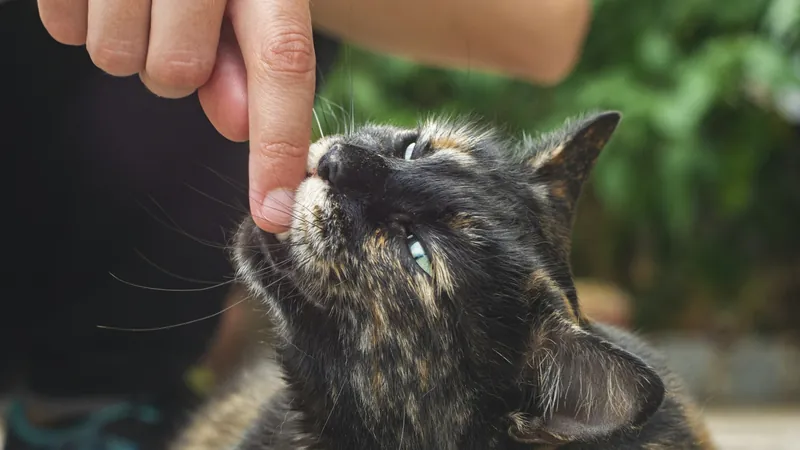
Why does my cat lick me?
Why does my cat lick me? 7 real reasons, why it turns into a bite, the signs that mean stress or pain, and how to cut back kindly.
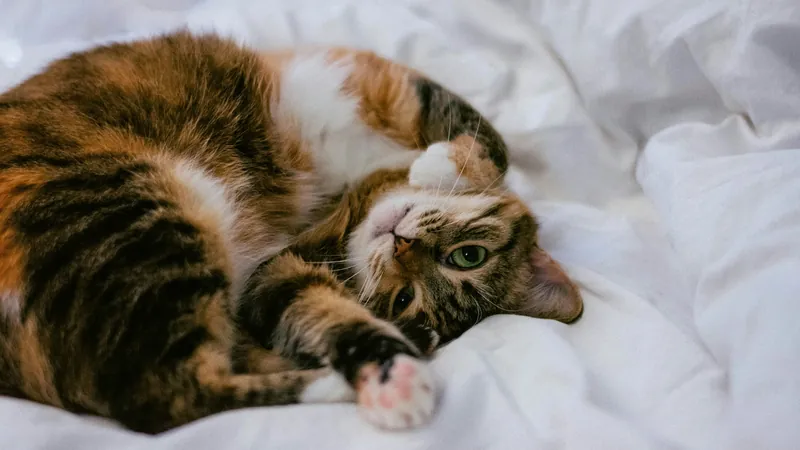
Why do cats make biscuits?
Why do cats make biscuits? 6 real reasons, the one that can mean stress or pain, how to stop kneading that hurts, and what to tell your sitter.
Do cats miss their owners?
Do cats miss their owners? Many do. Here are 7 signs your cat missed you, the signs that mean real stress, and simple ways to help them while you're away.