Guide
Why do cats make biscuits?
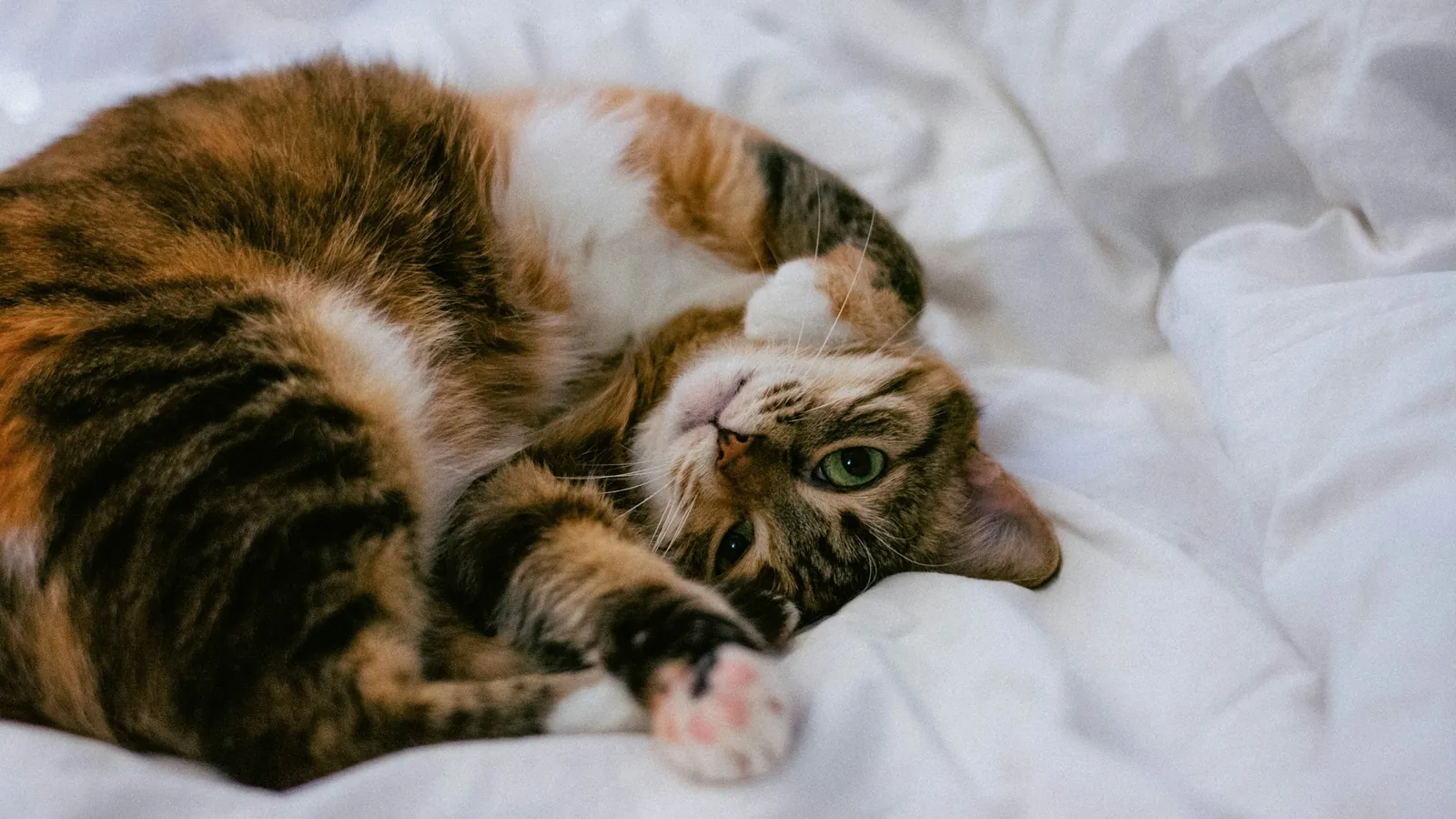
Why do cats make biscuits? Mostly because it feels good. That rhythmic push, push, push with their front paws (vets call it kneading) starts in kittenhood and usually means your cat feels safe and happy. But there are a few other reasons too, plus one or two times it's worth a closer look. Here are all six, how to save your legs from sharp claws, and what to tell your sitter so they know it's normal.
Quick answer
Cats make biscuits (knead) mostly because it's a comfort habit left over from nursing. Kittens knead their mom to get milk flowing. Adult cats keep doing it when they feel safe and content. Kneading also marks you with scent from their paws, makes a bed cozy and stretches muscles. Sudden extra kneading can mean stress or pain, so call your vet.
What does "making biscuits" mean?
"Making biscuits" is the cute name for kneading. Your cat pushes their front paws down one after the other into something soft, like a baker working dough. Blue Cross describes it as a rhythmic, alternating paw motion against something soft.
Every cat does it a little differently. Some keep their claws in, some let them out. Some purr loudly. Some even drool. Purina says cats knead blankets, cushions, laps and sometimes other cats or dogs in the home. Some cats knead a lot, some hardly ever, and Chewy notes that's often just personality.
The good news first: in most cases, a cat making biscuits is a relaxed, happy cat. VCA puts it simply: usually when you see a kneading cat, they're feeling comfortable and relaxed.
Why do cats make biscuits? 6 reasons
Nobody has proven one single answer. Purina points out the exact reason is still a theory. But vets and behavior experts agree on a short list, and most cats knead for more than one of these at once.
1. It's a happy kitten habit (the sweet one)
This is the big one. Kittens knead their mom's belly while nursing to get the milk flowing. VCA, PetMD, Blue Cross and the Toronto Humane Society all say the same thing. Behavior researcher Susan Hazel told Live Science this is the most likely explanation.
VCA adds that kneading is thought to release oxytocin, the feel good bonding hormone. So when your grown cat kneads, they're likely recreating that safe, cozy feeling from their kitten days. That's also why some cats drool while they knead. Blue Cross says they're half expecting the milk they used to get.
You might have heard that only cats weaned too early do this. Purina says that idea doesn't hold up, since nearly all cats knead.
2. They love you
If your cat makes biscuits on your lap or chest, take it as a compliment. VCA says cats usually knead only on people and animals they like. Cat behavior expert Kristyn Vitale told Scientific American that cats knead on their preferred people or their favorite person. Laura Watson of International Cat Care told Live Science cats knead especially around someone they feel safe with.
Blue Cross even says the happier a cat is, the harder they may knead. So those slightly pokey paws are basically a hug.
3. They're marking you as theirs
Cats have scent glands in their paws. VCA says they sit around the paws and claws. When your cat kneads, a little of their scent goes onto whatever they're pressing, including you. PetMD and Purina say this helps a cat claim their spot, their blanket or their person, and Purina adds it lets other cats know this one's taken.
You can't smell it, but your cat can. To them, a well kneaded blanket smells like home.
4. They're making the bed
Lots of cats knead right before they curl up for a nap. Purina explains wild ancestors pawed at leaves or tall grass to make a soft nest, and to check nothing was hiding in it. PetMD says wild cats knead grass and bedding before resting too. Your cat's blanket is the indoor version of that patch of grass.
5. It's a good stretch
Kneading works the muscles and tendons in the paws and legs. Chewy says it supports muscle and tendon health, which matters most for less active cats. The Toronto Humane Society calls it a limbering stretch. Think of it as cat yoga before bed.
6. They're calming themselves down
This is the one to keep an eye on. Kneading is soothing, so cats sometimes do it when they're worried or not feeling great. Chewy says kneading may help an anxious or upset cat calm down. PetMD says cats with soreness from an injury or arthritis may knead to stretch and ease tension. VCA notes sick cats may purr and knead to soothe themselves.
Most of the time it's still nothing. But if the kneading looks different from usual, read the next section.
Normal kneading vs. when to call the vet
Kneading on its own is normal. What matters is a change. PetMD and Chewy both say a cat who suddenly kneads a lot more than usual should see the vet, because it can be a sign of pain or anxiety. Here's a simple way to tell the difference:
| What you see | What it usually means | What to do |
|---|---|---|
| Kneading your lap, a blanket or the bed, purring, relaxed body | Happy and content (VCA, Blue Cross) | Enjoy it. Add a blanket if the claws hurt. |
| Kneading and drooling a little | Normal kitten memory (Blue Cross) | Nothing. A towel on your lap helps. |
| Kneading right before a nap | Making the bed (Purina, PetMD) | Nothing. Give them a soft bed of their own. |
| Kneading way more than usual, out of nowhere | Possible pain or anxiety (PetMD, Chewy) | Call your vet to rule out a health problem. |
| Kneading in odd places, like under the bed, plus hiding or eating less | Possible illness or discomfort (VCA) | Call your vet. |
| Rough, pummeling kneading | Can mean overstimulation or anxiety (Chewy) | Give them space. Mention it to your vet if it keeps happening. |
| Sucking on or eating the blanket while kneading | A habit Chewy says is worth addressing | Talk to your vet, and keep chewed fabric away. |
| Female cat kneading the air, rolling, very vocal, extra affectionate | Could be in heat (Purina) | Ask your vet about spaying. |
Also worth knowing: PetMD says the dopamine from kneading makes it rewarding, so in rare cases excessive kneading can become a compulsive habit. Your vet can help sort out what's going on and may suggest ways to lower stress at home.
How to stop kneading that hurts
Every source agrees on one thing: don't punish your cat for kneading. The Toronto Humane Society says never punish it, even when the claws dig in. PetMD warns punishment can make a cat more fearful and anxious, and Laura Watson told Live Science it's normal behavior and scolding could hurt your bond. Instead, try these:
- Put a thick blanket or towel on your lap. This is the number one tip from Blue Cross, Purina, PetMD and the Toronto Humane Society. Your cat still gets their biscuit time and your legs stay safe.
- Keep nails trimmed. PetMD, VCA and Chewy all recommend it. PetMD suggests getting your cat used to nail trims early with really good treats.
- Try soft claw caps if sharp nails keep being a problem. Chewy mentions them as an option.
- Give them their own kneading spot. A thick, fuzzy blanket in a favorite spot works well. PetMD says to reward them when they use it.
- Reward the gentle version. Susan Hazel suggests a treat or a pat when your cat kneads without claws, and gently moving away when the claws come out.
- Redirect. Purina suggests stroking your cat and guiding them to lie down, or offering a toy to grip during play.
PetMD also says declawing isn't the answer, since it removes the tips of the toes and can cause lasting pain and lameness.
And if your cat doesn't knead at all? That's fine too. Experts told Scientific American that cats who don't knead can still be deeply bonded to you. They just show it in other ways, like purring, rubbing on you or sitting nearby.
Tell your sitter about the biscuits
Here's where it helps to write things down. A new sitter doesn't know your cat's normal. Biscuits on their lap might look strange to them, or a sudden kneading spree while you're away might be the first hint your cat is stressed. A few lines makes it easy:
- Quirks: "Makes biscuits on the gray blanket every night before bed. Totally normal, means she's happy."
- Lap tips: "She uses her claws. Grab the throw blanket before she climbs on."
- What's not normal: "If she's kneading nonstop, hiding or skipping meals, text me and call the vet."
- Comfort items: "Leave her fuzzy blanket out. It helps her settle when we're gone." (Laura Watson suggests leaving a cushion or blanket out when you're away.)
- Vet info: your vet's number and the nearest emergency clinic.
DearSitter puts all of that on one simple link your sitter opens on their phone, with a daily checklist, your vet info and printable emergency cards. Peek at the example page, then make your cat's page. Planning a trip? Our guide on how long a cat can be left alone helps you plan visits, and the pet sitter checklist covers everything else to leave behind. If treats are part of the routine, see can cats eat eggs, and keep lilies out of the house. Have a dog too? Make their page here.
Frequently asked questions
Why do cats make biscuits?
Mostly because it's a comfort habit from kittenhood. Kittens knead their mom to get milk flowing, and adult cats keep doing it when they feel safe and content. Kneading also leaves scent from their paw glands, makes a bed cozy and stretches muscles.
Why does my cat make biscuits on me?
It's usually a sign of affection. VCA says cats tend to knead only on people and animals they like, and it also marks you with scent from their paws, so you smell like theirs.
Is it bad if my cat kneads a lot?
Usually not. But if your cat suddenly kneads much more than usual, kneads in odd places, or is also hiding or eating less, PetMD, Chewy and VCA say to check with your vet, since it can be a sign of pain, illness or anxiety.
Why does my cat drool when making biscuits?
Blue Cross says some cats drool while kneading because it reminds them of nursing as a kitten, when kneading meant milk was on the way. It's normal.
How do I stop my cat from kneading with claws?
Don't punish it. Put a thick blanket or towel on your lap, keep nails trimmed, give your cat their own soft blanket to knead, and reward gentle, claws-in kneading.
Why doesn't my cat make biscuits?
Some cats just don't, and that's fine. Experts told Scientific American that cats who don't knead can still be closely bonded to you and show it by purring, rubbing on you or sitting nearby.
Sources
- VCA Animal Hospitals: Why do cats knead? (Or, the art of biscuit making!)
- PetMD: Why do cats knead? (Hannah Hart, DVM; reviewed by Jennifer Coates, DVM)
- Chewy: Why do cats knead? Is this normal?
- Purina: Why do cats knead?
- Blue Cross: Why do cats knead?
- Toronto Humane Society: Why does my cat make biscuits?
- Scientific American: Why do cats knead like they're making biscuits?
- Live Science: Why do cats knead?
This guide is general information, not veterinary advice. If you're worried about your pet, call your vet.
Keep reading
How long can a cat be left alone?
How long can a cat be left alone? Expert guidance for adult cats, kittens and seniors, why daily check-ins matter, and what to do when you travel.

The pet sitter checklist: 25 things to leave your sitter
A printable pet sitter checklist for dogs and cats: feeding, meds, routines, emergency contacts and house notes. What to leave your sitter before you go.
Why does my cat lick me?
Why does my cat lick me? 7 real reasons, why it turns into a bite, the signs that mean stress or pain, and how to cut back kindly.