Guide
Why does my cat lick me?
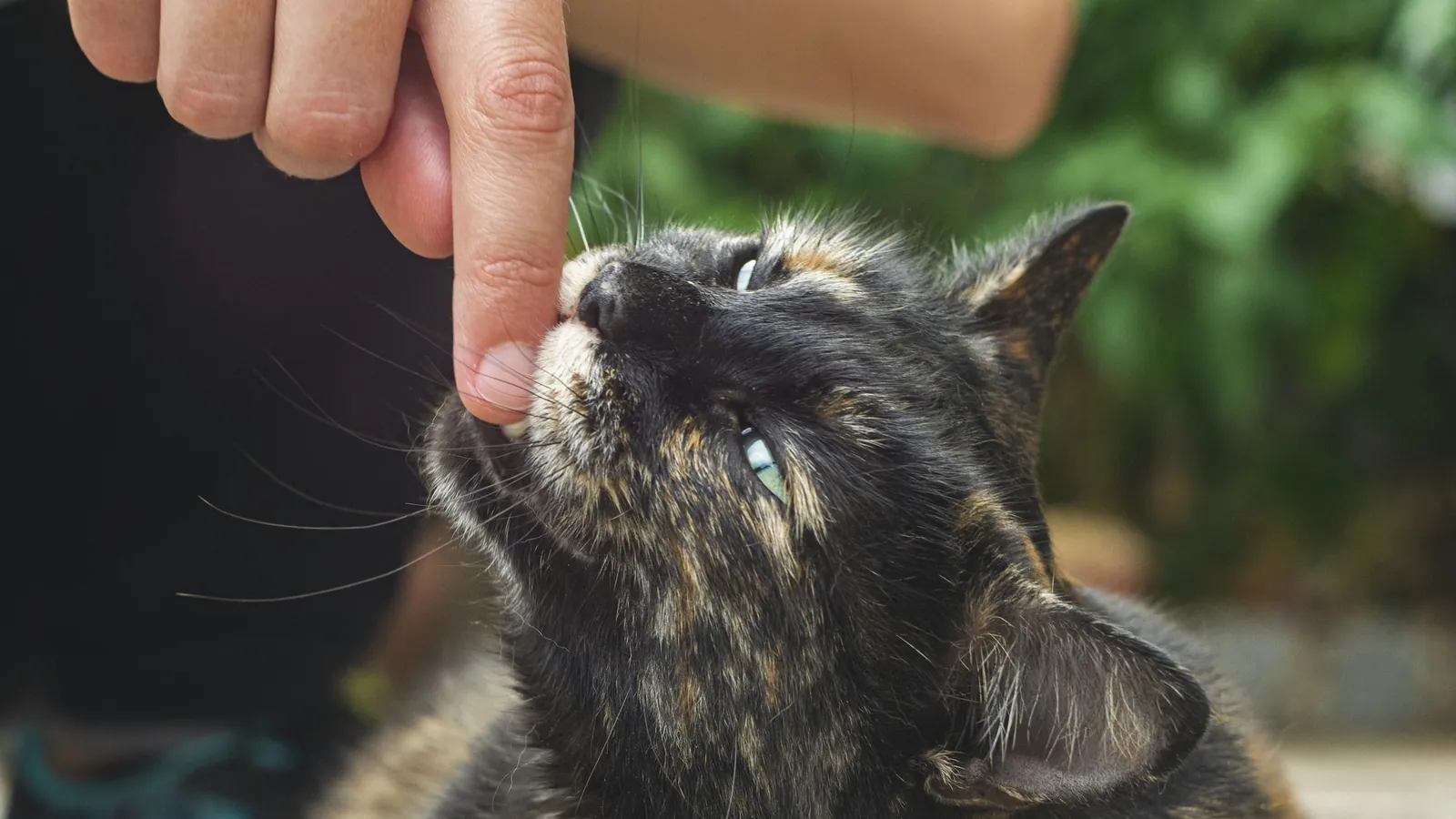
Why does my cat lick me? If your cat has ever sandpapered your hand, your nose or your hair, you've probably wondered. Most of the time it's a compliment. Your cat is grooming you like family, sharing their scent, or just saying "you're mine." Sometimes, though, a lot of licking means your cat is stressed or doesn't feel well. Here are the 7 most common reasons, why a lick can turn into a bite, how to tell normal from "call the vet," and how to cut back kindly.
Quick answer
Usually, it's love. Cats lick the people they trust to groom them, bond, mark them with their scent, get attention, taste salty skin and calm themselves down. It's a habit kittens learn from their mom. Call your vet if the licking is new, sudden or nonstop, since it can point to stress, pain or an upset stomach.
Why does my cat lick me? 7 common reasons
Licking is a big part of cat life. Purina explains that cats learn it from their mothers, who lick their kittens clean, so it "simply comes naturally." Grown cats who get along often groom each other too. Experts call this allogrooming, and Cats Protection says it can happen between different species, which includes you. Here's what it usually means when your cat licks you.
1. They're grooming you like family
Rover says the most common reason cats lick you is simply to groom you. In a cat's mind, you're part of the group, and group members keep each other tidy. PetMD's veterinary behaviorist, Dr. Alison Gerken, notes that grooming strengthens cats' social bonds. So a lick on the hand is a lot like a hug.
2. They trust you and like you
Veterinarian Dr. Patty Khuly writes on Vetstreet that experts believe cats lick and groom their cat and human housemates to show trust and care. A cat who licks you feels safe around you. That's a big deal for an animal that likes to be in control.
3. They're marking you as theirs
Cats know their world by smell. Cats Protection says saliva makes you smell more familiar, which marks you as safe and part of the household. PetMD calls this group membership. Purina adds that a cat who sees you as their own may lick you to claim you as part of their territory.
4. They want your attention
If you laugh, talk or pet your cat every time they lick you, they notice. PetMD and Rover both say cats learn that licking gets a reaction, so they do it more. Smart cat.
5. You taste interesting
PetMD says human sweat has sugar and salts that cats may find appealing. Rover adds that food on your skin can draw licks, and that cats have a special scent organ on the roof of their mouth (the vomeronasal organ) for checking out smells. If the licking ramps up after you cook or work out, this is likely why.
6. It feels good and calms them down
Cats Protection says licking releases endorphins, giving cats a natural "high." That's why cats lick themselves and sometimes you, too. PetMD says licking can also help a cat ease stress from things like visitors or loud noises.
7. It's a leftover kitten habit
PetMD says a cat who was weaned too early may lick you for the comfort they once got from nursing. These cats often knead and purr at the same time. Sound familiar? Our guide on why cats make biscuits covers the kneading side of this.
Why does my cat lick me, then bite me?
This one confuses a lot of people. One second it's sweet licks, the next it's teeth. Here's what the experts say is going on:
- It's part of grooming. Rover says biting can be part of the grooming routine and usually isn't meant to hurt. Cats nibble each other to work out knots, too.
- They've had enough. Cats Protection says cats may lick someone who's handling them when they don't want to be handled. If the petting keeps going, a bite or scratch can follow fast.
- They're overstimulated. PetMD says licking can turn into biting when a cat is overstimulated, unhappy with the interaction or in pain. The ASPCA explains that petting the same spot over and over can quickly become unpleasant, like someone rubbing the same patch of your back again and again.
- They want to play. Rover says a bite can also be an invite to play.
The ASPCA lists the warning signs to watch for: your cat quickly turning their head toward your hand, a tense body, ears flattened or flicking forward and back, a twitching tail, fidgeting and big, dilated pupils. Cats Protection says to leave your cat alone if their tail is swishing or their ears are pinned back. Stop petting at the first sign and let your cat walk away.
If the lick and bite combo is new, talk to your vet. The ASPCA says cats who are sore from illness or pain may react to petting with sudden aggression, and PetMD says to rule out medical causes if the biting keeps happening.
Why your face, hair or hands?
| Where they lick | The likely reason |
|---|---|
| Your hands | Scent and taste. Hands carry food smells and salty sweat (PetMD, Rover). It also gets a quick reaction. |
| Your face or nose | Bonding and attention. Rover mentions nose licking as a way to get noticed. Faces are also right next to your food. |
| Your hair | Grooming. Rover says a cat's tongue is built to pull out tangles and loose fur, so your hair gets the same treatment. |
| Your arms or legs | Salty skin after a workout (PetMD), or calming themselves while curled up with you |
Why does a cat's tongue feel like sandpaper?
Purina explains that a cat's tongue is covered in tiny backward-facing barbs called papillae. They're made of the same stuff as claws, and they help pull dirt and loose hair out of the coat. Great for grooming fur. A little scratchy on human skin.
When licking is too much: normal vs. call the vet
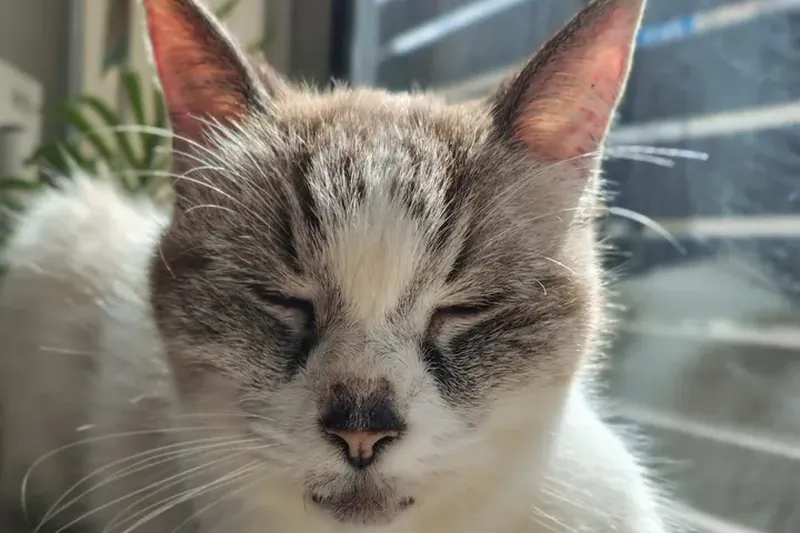
A few licks during cuddle time is normal. PetMD says licking that's excessive or that started recently is worth a vet visit. If anxiety licking goes untreated, it can become compulsive, which means it gets in the way of your cat's daily life. PetMD lists nausea, pain and discomfort as possible medical causes.
| Probably normal | Worth a vet visit |
|---|---|
| A few licks while you pet or cuddle | Licking that's new, sudden or way more than usual |
| Licking after you eat or cook | Licking that keeps going even when you redirect them |
| A lick and a soft nibble during grooming | Licks that turn into hard bites more and more often |
| Normal self-grooming | Bald patches or thin fur on the belly, back or inner legs, red skin or sores, or more hairballs (PetMD) |
| Extra licks on a busy day that settle after | Other stress signs: hiding, pulling away, scratching things up, low energy, or trying to escape (Rover) |
Over-licking themselves is part of the same picture. PetMD says cats may overgroom because of itchy skin, fleas, allergies or pain, and that stress licking is often set off by a change in routine, like a move or a new family member. Their advice is clear: always book a vet visit if your cat is overgrooming. PetMD also suggests that if licking you hasn't eased after about a week of the tips below, check in with your vet.
How to get your cat to lick you less (kindly)
You don't have to stop all the licking. If you like it, enjoy it. If it's too much (or too scratchy), every source agrees on gentle steps. No scolding, no pushing.
- Never punish. PetMD says punishment hurts your bond and doesn't change the behavior. Cats Protection adds that pushing your cat away can confuse them and add stress.
- Calmly walk away. PetMD suggests getting up when the licking starts, without ignoring your cat the rest of the time.
- Redirect. Offer a wand toy, a food puzzle or a scratching post, then praise them for using it (PetMD, Rover). Cats Protection suggests brushing your cat instead, since most cats prefer a brush to being licked back.
- Cover up. PetMD suggests long sleeves or a small towel over your lap during cuddle time.
- Be careful with treats. Rover suggests a treat as soon as the licking stops. Purina says to play first, keep treats inside the daily food allowance, and remember a treat can also teach your cat that licking pays.
- Add play and enrichment. PetMD recommends rotating toys and spending at least 15 minutes interacting with your cat three times a day.
Is it safe to let your cat lick you?
For most people, yes. PetMD says passing a disease this way is very rare, but cats do carry bacteria in their mouths that can infect open wounds. A few easy habits:
- Skip face licks and cuts. PetMD says to avoid letting your cat lick your face or any cuts.
- Take extra care if you're at higher risk. PetMD says people with weaker immune systems, seniors and pregnant people are most at risk.
- Keep creams off the menu. Don't let your cat lick skin with lotion, ointment or other products on it. If they swallow some, PetMD says to call your vet or the Pet Poison Helpline right away.
Does your cat do this too? Tell your sitter
A sitter who doesn't know your cat might be surprised by the licks, or by the nip that follows. They also might not notice if the licking suddenly ramps up while you're away, which can be a stress sign. A few lines on your cat's page clears it up:
- Quirks: "Licks your hand while you pet her, then sometimes nibbles. That's her saying she's done. Stop and let her walk off."
- Warning signs: "Tail flicking or ears going flat means no more petting."
- Play: "Wand toy after dinner for 10 minutes. It helps her settle."
- Call me if: "She's licking herself bald anywhere, hiding all day, throwing up, or won't eat."
- Contacts: your vet, the nearest emergency clinic and your number.
Does your cat do this too? Put it on their sitter page so the sitter knows it's normal. DearSitter keeps quirks, feeding, meds, your vet and printable emergency cards on one link your sitter opens on their phone. Peek at the example page, then make your cat's page. Planning a trip? Our guide on how long a cat can be left alone helps you plan, and the pet sitter checklist covers everything else to leave behind.
Frequently asked questions
Why does my cat lick me?
Usually it's affection. Cats lick people they trust to groom them, bond, mark them with their scent, get attention, taste salty skin and calm themselves. If the licking is new, sudden or nonstop, check with your vet, since it can point to stress, pain or nausea.
Why does my cat lick me and then bite me?
Rover says nibbling can be part of grooming. It can also mean your cat has had enough petting or is overstimulated. Watch for a twitching tail, flattened ears or dilated pupils, stop petting and let them walk away. If it's new, ask your vet.
Does my cat lick me to show love?
Often, yes. PetMD says grooming strengthens cats' social bonds, and Vetstreet says experts believe cats lick their human housemates to show trust and care. Cats Protection says it also marks you as safe and part of the household.
Why does my cat lick my hair?
It's usually grooming. Rover explains that a cat's tongue is built to pull out tangles and loose fur, so your cat may be tidying you up the way they would a cat friend.
Is it bad if my cat licks me a lot?
A few licks is normal. PetMD says licking that's excessive or started recently is worth a vet visit, and so is overgrooming with bald patches, red skin or more hairballs.
How do I get my cat to stop licking me?
Skip the scolding. Calmly get up when the licking starts, redirect to a toy, brush or food puzzle, wear long sleeves during cuddles, and add more daily play. If it hasn't eased in about a week, PetMD says to see your vet.
Sources
- PetMD: Why does my cat lick me? (Alison Gerken, DVM, DACVB)
- Cats Protection: Why does my cat lick me?
- Rover: Why does my cat lick me?
- Vetstreet: Why does my cat lick me? (Dr. Patty Khuly)
- Purina: Why does my cat lick me?
- ASPCA: Overstimulation and petting-induced aggression
- PetMD: Why cats overgroom and how you can stop it
This guide is general information, not veterinary advice. If you're worried about your pet, call your vet.
Keep reading
Why do cats make biscuits?
Why do cats make biscuits? 6 real reasons, the one that can mean stress or pain, how to stop kneading that hurts, and what to tell your sitter.
How long can a cat be left alone?
How long can a cat be left alone? Expert guidance for adult cats, kittens and seniors, why daily check-ins matter, and what to do when you travel.
Why does my cat stare at me?
Why does my cat stare at me? 7 reasons cats stare, how to read a slow blink vs. a hard stare, and the few times staring means a trip to the vet.