Guide
Can cats eat turkey?
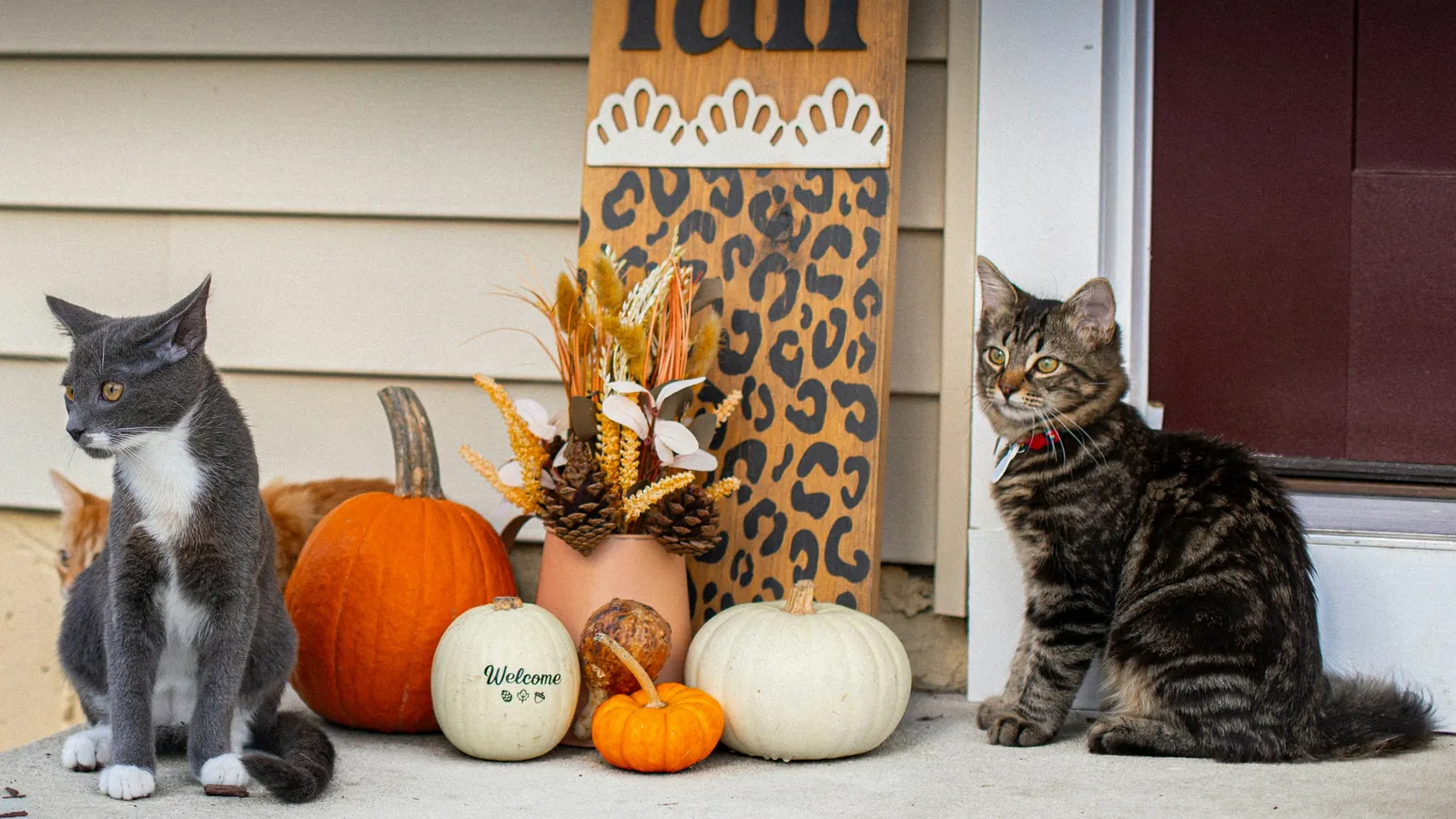
Can cats eat turkey? Yes. Plain, cooked turkey is a safe little treat for most healthy cats, and plenty of cats think it's the best part of the holiday. The trouble is everything that usually comes with it: the skin, the bones, the gravy and the onion in the stuffing. Here's how to share safely, and what to tell your sitter if you're away for Thanksgiving.
Quick answer
Yes, cats can eat turkey if it's plain, fully cooked and boneless. Skip the skin, fat, gravy, seasoning and deli turkey. Keep it small: treats should stay under 10% of your cat's daily calories. Never give raw turkey or turkey bones, and keep anything with onion or garlic away from your cat.
Can cats eat turkey? The short answer
Yes. PetMD says plain, cooked turkey is safe and nutritious for cats, and Purina agrees that a cat's stomach handles cooked turkey just fine. Cats are meat eaters, so a few bites of lean turkey is a natural fit.
The catch is the word "plain." The turkey on your holiday table usually has butter, salt, herbs, onion, garlic, crispy skin and gravy. Those extras are where the problems start. A bite of plain breast meat? Lovely. A bite of seasoned skin dipped in gravy? Not a good idea.
One more thing: turkey is a treat, not a meal. Your cat's regular food is made to cover everything they need. Turkey on its own isn't.
Which turkey is safe for cats?
Here's a quick look at the different kinds of turkey and whether they're cat friendly.
| Type of turkey | OK for cats? | Why |
|---|---|---|
| Plain cooked breast (white meat) | Yes, in small bites | Lean, high in protein, easy to digest |
| Plain cooked dark meat | A little | More iron and B vitamins, but more fat and calories |
| Plain cooked ground turkey | Yes, in small bites | Same rules: no oil, salt or seasoning |
| Turkey skin and fat drippings | No | Too fatty, can cause vomiting and diarrhea |
| Raw or undercooked turkey | No | Can carry Salmonella and E. coli |
| Turkey bones (cooked or raw) | No | Choking, splinters and blockages |
| Deli turkey, turkey bacon, sausage | No | Lots of salt, preservatives and seasoning |
| Turkey with gravy or stuffing | No | Often contains onion or garlic, which are toxic to cats |
How much turkey can a cat eat?
Not much. PetMD, Purina and Chewy all use the same rule: treats, turkey included, should be no more than 10% of your cat's daily calories. The other 90% should come from their complete cat food.
- PetMD's size guide: a piece about the size of the tip of your thumb.
- Chewy's guide: about 1 to 2 tablespoons of plain cooked turkey a day for most healthy adult cats, as long as other treats are cut back.
- First time? Start with a tiny piece and watch for vomiting or diarrhea over the next day.
Cut it into small, bite-sized pieces. Purina points out that big chunks can be a choking hazard, and cats tend to gulp.
Some cats should skip it unless your vet says yes: cats on a prescription diet, cats with kidney disease (Chewy notes they often need a careful balance of protein and phosphorus) and cats who've had pancreatitis, since fatty food can be a problem for them.
How to prepare turkey for your cat
- Cook it all the way through. Bake, boil or broil it. PetMD suggests skipping deep fried turkey because of the extra fat.
- Keep it plain. No salt, butter, oil, herbs, spice rubs, onion or garlic.
- Take off the skin and fat. That's where most of the grease sits.
- Remove every bone. Check small pieces carefully.
- Let it cool to room temperature.
- Cut it small and offer a few pieces, or mix them into their usual food.
The easiest trick on a holiday? Set aside a few pieces of plain breast meat before anything gets seasoned or basted.
Turkey extras to keep away from your cat
Bones
Cooked turkey bones can splinter into sharp pieces. Chewy and Purina warn they can cause choking, mouth and throat injuries, and damage further down. A swallowed bone can also cause a blockage that may need emergency surgery. The ASPCA calls poultry bones a major choking hazard, so the carcass goes straight into a closed trash can.
Skin, fat and drippings
Turkey skin is mostly fat. Too much fat can cause vomiting and diarrhea, and the American Animal Hospital Association (AAHA) notes that grease and skin can lead to pancreatitis, which can be very serious.
Raw turkey
Purina's advice is simple: cats shouldn't eat raw meat of any kind. Raw and undercooked turkey can carry Salmonella and E. coli, which can make your cat sick and can spread to people in your home too.
Onion, garlic and stuffing
This is the big one. PDSA explains that onions, garlic, leeks, chives and shallots are all toxic to cats, even cooked or dried, and onions are the worst. They damage red blood cells and can cause anemia. They hide in stuffing, gravy, seasoning blends and store-bought sauces. AAHA says stuffing is a common problem for exactly this reason.
Deli turkey
Sliced deli turkey, turkey bacon and turkey sausage are much saltier than plain turkey and often have preservatives and flavorings. Purina notes a tiny unseasoned piece is unlikely to hurt, but processed turkey shouldn't be a regular thing.
The string
Many turkeys are tied with string, and cats love to play with string. Swallowed string can get caught in the gut and cause a serious problem called a linear foreign body. Throw the string out right away, in a bin your cat can't open.
Signs your cat ate too much turkey (or the wrong part)
| What happened | Signs to watch for | What to do |
|---|---|---|
| Too much plain turkey or a little skin | Vomiting, diarrhea, low appetite, sore belly | Often settles within a day (Chewy). Call your vet if it lasts longer. |
| Ate a bone | Gagging, seeming distressed, vomiting, not eating | Call your vet now. |
| Ate seasoned turkey, gravy or stuffing | Stomach upset in 6 to 24 hours; pale or yellow gums, weakness or trouble breathing in 1 to 5 days (PDSA) | Call your vet or a poison line now, before signs show up. |
| Swallowed the string | Vomiting and not eating, often fairly quickly, then low energy | Call your vet now. Don't pull on string you can see. |
Thanksgiving tips for cat owners
- Give them a mini feast. A few bites of plain turkey mixed into their usual dinner lets them join in.
- Guard the counters. Cats jump. Don't leave the turkey or the roasting pan out while you're at the table.
- Empty the trash often. The ASPCA suggests taking it out through the day so curious pets don't dig in.
- Watch the other dangers. The ASPCA also flags raw yeast dough, chocolate and the sweetener xylitol.
- Make a quiet room. A houseful of guests can be a lot for a cat. A closed bedroom with their bed, water and litter box helps.
- Ask guests to keep bags zipped. The ASPCA warns that pets getting into guests' medication is common and can be very dangerous.
- Tell guests the rule: no feeding the cat from the table. Kids love to sneak bites.
Have a dog too? Dogs have their own rules. See can dogs eat turkey, plus cooked bones and onions, or search anything in our dog food checker.
Tell your sitter about turkey
If you're traveling for the holidays, your sitter won't know your cat's treat rules unless you write them down. A few lines saves a lot of guessing:
- Treats: "Plain cooked turkey is OK, a thumb tip size piece a day, no skin, no bones."
- Never give: "Onion, garlic, chives, gravy, stuffing, deli meat, any bones, lilies."
- Trash and string: "Keep the kitchen bin closed. No string or ribbon left out."
- If something goes wrong: your vet's number, the nearest emergency clinic and the two poison lines.
DearSitter puts all of this on one link. Your cat's page has a "never give" list, feeding notes, your vet and printable emergency cards, and your sitter can tick off each feeding. See how it looks on the example page, then make your cat's page. Our pet sitter checklist covers everything else to leave, and how long a cat can be left alone helps you plan visits. Bringing flowers home for the table? Read are lilies toxic to cats first.
Frequently asked questions
Can cats eat turkey?
Yes. Plain, fully cooked, boneless turkey is a safe treat for most healthy cats. Skip the skin, fat, gravy, seasoning and deli turkey, and keep treats under 10% of daily calories.
Can cats eat turkey bones?
No. Cooked turkey bones can splinter, and any bone can cause choking, mouth injuries or a blockage that may need surgery. Call your vet if your cat ate one.
Can cats eat raw turkey?
No. Raw and undercooked turkey can carry bacteria like Salmonella and E. coli, which can make cats and the people around them sick.
Can cats eat deli turkey?
It's best to skip it. Deli turkey is much saltier than plain turkey and often has preservatives and seasonings. A tiny unseasoned piece is unlikely to hurt, but it shouldn't be a regular treat.
Can cats eat turkey skin?
No. Turkey skin is very fatty and can cause vomiting and diarrhea. Fat and grease can also lead to pancreatitis.
What Thanksgiving foods are bad for cats?
Anything with onion or garlic (stuffing, gravy, many sides), turkey bones and skin, raw yeast dough, chocolate and anything sweetened with xylitol. Keep the trash closed and the turkey string out of reach.
Sources
- PetMD: Can cats eat turkey?
- Purina: Can cats eat turkey? A guide to safety
- Chewy: Can cats eat turkey?
- ASPCA: Thanksgiving safety tips
- AAHA: My pet ate Thanksgiving food. What should I be worried about?
- PDSA: Onion and garlic poisoning in cats
- Mar Vista Animal Medical Center: Linear foreign bodies
- ASPCA Animal Poison Control
- Pet Poison Helpline
This guide is general information, not veterinary advice. If you're worried about your pet, call your vet.
Keep reading
Can cats eat eggs?
Can cats eat eggs? Yes, plain cooked eggs are a safe treat. Why raw eggs are a no, how much to give, scrambled vs boiled, and what to tell your sitter.

Are lilies toxic to cats?
Are lilies toxic to cats? Yes. Even a little pollen can cause kidney failure. Which lilies are dangerous, the symptoms, and why speed matters.
How long can a cat be left alone?
How long can a cat be left alone? Expert guidance for adult cats, kittens and seniors, why daily check-ins matter, and what to do when you travel.