Guide
Are Christmas trees toxic to cats?
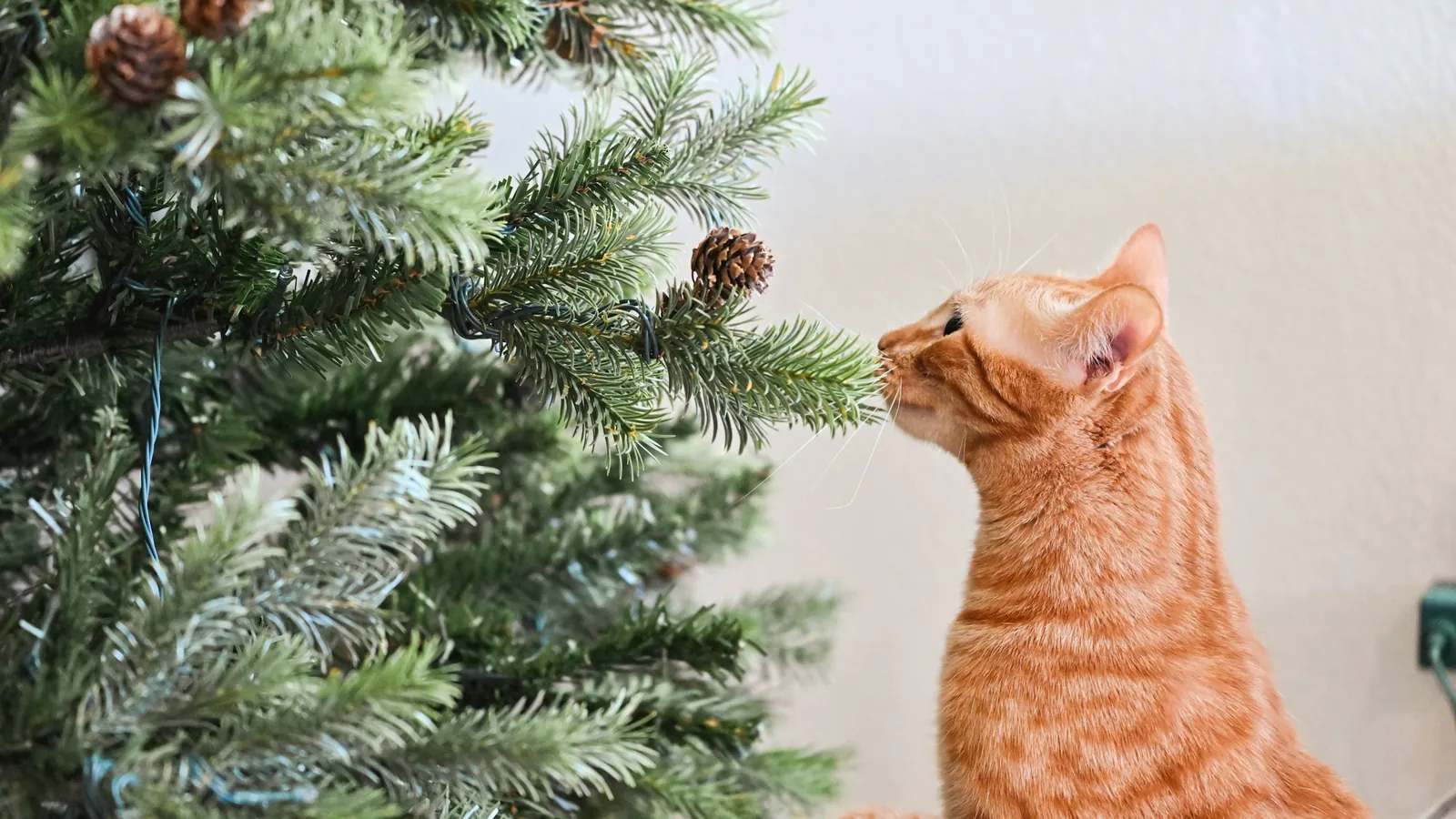
Are Christmas trees toxic to cats? A little, but the tree itself is rarely the big problem. Fir, spruce and pine needles are only mildly toxic. The bigger risks are the things around the tree: tinsel, ribbon, tree water, glass ornaments and light cords. Here's what each one can do, the signs to watch for, and an easy setup so you and your cat can both enjoy the tree.
Quick answer
Mildly. PetMD says fir, spruce and pine needles are mildly toxic and can upset a cat's stomach or mouth. A cat would usually need to eat a lot to get very sick. The bigger dangers are tinsel and ribbon (blockages), tree water with additives, broken ornaments and chewed light cords.
Are Christmas trees toxic to cats?
Real Christmas trees are mildly toxic to cats. PetMD says the most common holiday trees are fir, spruce and pine, and their needles are mildly toxic if eaten because of the oils and sap. A cat would have to eat quite a lot to get seriously ill.
That doesn't mean "no worries," though. Pet Poison Helpline says needles can cause nausea, vomiting, skin irritation or a stomach injury, and that cats are very sensitive to pine oils, so chewing on the tree again and again could cause problems. Needles also don't digest well. Pet Poison Helpline adds that a big amount can cause a blockage or even poke a hole in the gut.
Cats Protection says some oils from real trees can be toxic, and fallen needles can hurt paws. So the tree is not a poison emergency for a quick sniff, but it's not a snack either.
The 6 real Christmas tree risks for cats
1. Needles
Possible stomach upset, drooling and mouth irritation, according to PetMD and Pet Poison Helpline. PetMD also notes that fallen needles can block or puncture the throat, stomach or intestines. Sweep them up often.
2. Tree water
Cats love drinking from the tree stand. The ASPCA says standing tree water can grow bacteria that cause nausea, diarrhea and stomach upset. PetMD warns that additives like fertilizers, preservatives and sugar substitutes (especially xylitol) are toxic and can cause anything from a mild tummy ache to seizures or liver and kidney problems. Cornell's Feline Health Center says to use plain water with no chemicals added and keep cats away from it.
3. Tinsel and ribbon
This is the big one. Pet Poison Helpline calls tinsel a common cause of bowel blockages in cats, and says cats usually can't pass it or throw it up, so surgery may be needed. PetMD explains that one end can catch under the tongue while the rest moves through the gut and cuts the intestine. Cornell calls it very life-threatening. Long ribbon does the same thing, and Pet Poison Helpline says cats with this kind of blockage are good at hiding it and may keep eating and drinking for a while.
4. Glass ornaments
The ASPCA says broken glass or plastic ornaments can cut the mouth and digestive tract. PetMD adds choking and blockages. Salt dough ornaments are a sneaky one too: the ASPCA says they can cause dangerous electrolyte problems, even when dry.
5. Lights and cords
A chewed cord can give a cat an electric shock. Pet Poison Helpline says cats who chew a light strand often have trouble breathing and burns inside the mouth, and need a vet right away. The ASPCA calls this potentially lethal.
6. The tree tipping over
Cats climb. Pet Poison Helpline and the ASPCA both say to anchor the tree so it can't fall on your cat during an adventure.
Real vs. artificial: which is safer for cats?
An artificial tree takes needles and tree water off the list. Pet Poison Helpline says it lowers the risk, since live trees come with sap, water and needles. But a fake tree isn't chew-proof. PetMD says chewed plastic or aluminum can still irritate the mouth and cause a blockage, and Cornell notes a fake tree won't stop a determined chewer.
| Risk | Real tree | Artificial tree |
|---|---|---|
| Needles and pine oils | Yes, mildly toxic | No oils, but chewed bits can cause a blockage |
| Tree water | Yes, keep it covered | No |
| Sap on fur | Yes, wash it off | No |
| Tinsel, ribbon, ornaments, cords | Yes | Yes |
| Tipping over | Yes, anchor it | Yes, anchor it |
Going real? PetMD suggests a "non-drop" tree such as a Nordmann fir, so fewer needles end up on the floor.
Signs to watch for (and when to call the vet)
| Keep an eye on it | Call your vet now |
|---|---|
| Sniffed or batted the tree, acting normal | You saw your cat eat tinsel, ribbon or string |
| Nibbled a needle or two, eating fine | Vomiting more than once, or diarrhea |
| Took a quick sip of plain tree water | Drank water with plant food or preservatives in it |
| Knocked off a soft ornament | Chewed a glass ornament or a salt dough one |
| Climbed in, got out with no sap on their fur | Chewed a cord, drooling, burns in the mouth or trouble breathing |
| Fine after a climb, nothing chewed | Low appetite or just not acting like themselves |
Remember, Pet Poison Helpline says cats with a string or ribbon blockage can hide it well and keep eating for a while. If you know they swallowed some, call your vet even if they seem fine.
For anything you think might be poisoning, call your vet, an emergency vet, or a 24/7 poison line: ASPCA Animal Poison Control at (888) 426-4435 or Pet Poison Helpline at (855) 764-7661. A fee may apply. Cats Protection says to bring the packaging or item with you if you know what it was.
How to cat-proof your Christmas tree
These tips come from Cornell, PetMD, the ASPCA, Cats Protection and Pet Poison Helpline:
- Anchor it. Use a heavy base or weights, or tie the tree to the wall or ceiling with a hook and wire.
- Cover the water. Use a covered tree base and plain water only. No plant food or preservatives.
- Skip tinsel. Go tinsel-free, and skip long ribbon and string-like garland.
- Go unbreakable down low. Cornell suggests cloth, straw or wood ornaments, tied on with cloth loops instead of hooks. Cats Protection says to hang baubles near the top. Keep glass and salt dough ornaments off the tree.
- Protect the cords. Use cord protectors, tie cords up, and switch the lights off when you're out. PetMD suggests battery lights with the pack hidden in the tree.
- Make it less tempting. Cornell suggests lightly spraying lower branches with a scent cats dislike, like citrus. PetMD mentions a cat-safe deterrent spray around the base.
- Wash off sap. Pet Poison Helpline says to wash sap off fur right away so your cat doesn't groom it off.
- No cat presents under the tree. Cats Protection says catnip gifts will only pull them in.
- Close the door. If the tree just can't be made safe, PetMD says keep your cat out of that room when you're not around.
Other holiday plants and cats
The tree isn't the only green thing coming in for the season. Here's a quick look:
| Plant | What it can do |
|---|---|
| Lilies | Very toxic. Can cause kidney failure (ASPCA). Read our lilies guide. |
| Mistletoe | Stomach upset. Large amounts may affect the heart (ASPCA, Pet Poison Helpline). |
| Holly | Vomiting, diarrhea, drooling and low energy (Pet Poison Helpline). |
| Amaryllis | Vomiting, drooling, diarrhea. The bulb is the most toxic part (Pet Poison Helpline). |
| Poinsettia | Mild to moderate stomach upset, not as dangerous as its reputation (ASPCA, Pet Poison Helpline). |
| Christmas cactus | Considered non-toxic. May cause mild tummy upset (Pet Poison Helpline). |
Holiday food is its own list. Our guide to whether cats can eat turkey covers the Thanksgiving and Christmas table. Got a dog too? Check the can my dog eat it checker.
Traveling for the holidays? Tell your sitter this
Cats Protection says sitters and catteries get busy at Christmas, so book early. And a sitter walking into a decorated house needs to know the tree rules. A few lines on your cat's page cover it:
- Never-give list: "No tinsel, ribbon or string toys left out. No tree water, ever."
- Tree rules: "Lights off when you leave. Door to the tree room stays closed overnight."
- Quirks: "She loves sniffing the tree. That's fine. Chewing it is not."
- When to call: "Vomiting more than once, not eating, or you see string in her mouth: call the vet."
- Contacts: your vet, the nearest 24/7 emergency clinic, both poison lines and your number.
- A quiet spot: Cornell and Cats Protection both suggest a calm room with food, water, a litter box and a bed when the house is busy.
DearSitter puts all of that on one link your sitter opens on their phone, with a daily check-off list and printable emergency cards. See the example page, then make your cat's page. If you're away for a few days, our guide on how long a cat can be left alone helps you plan visits, and the pet sitter checklist covers the rest.
Frequently asked questions
Are pine needles toxic to cats?
Mildly. PetMD says fir, spruce and pine needles are mildly toxic because of their oils and sap. They can upset the stomach and mouth, and lots of needles can cause a blockage. Call your vet or a pet poison line if your cat ate some.
Is Christmas tree water bad for cats?
It can be. The ASPCA says standing tree water can grow bacteria that cause stomach upset, and PetMD warns that additives like fertilizer, preservatives and xylitol are toxic. Use plain water and cover the stand.
Are artificial Christmas trees safe for cats?
Safer, but not risk-free. They skip the needles, sap and tree water. PetMD says chewed plastic or aluminum can still irritate the mouth and cause a blockage, so tinsel, cords and ornaments still need care.
What happens if my cat eats tinsel?
It can cause a serious intestinal blockage that often needs surgery, according to Pet Poison Helpline and PetMD. Cats can hide it and keep eating for a while, so call your vet right away even if your cat seems fine.
How do I keep my cat out of the Christmas tree?
Anchor the tree, skip tinsel, hang unbreakable ornaments down low and glass ones up high, protect cords, and try a citrus scent or cat-safe spray on lower branches. Cornell also suggests 5 to 10 minutes of play with your cat every day.
Is a Christmas cactus toxic to cats?
Pet Poison Helpline says Christmas cactus is considered non-toxic. It may cause mild vomiting or diarrhea if eaten, but serious problems aren't expected.
Sources
- PetMD: Are Christmas trees toxic to cats?
- Pet Poison Helpline: Cats and Christmas trees
- Pet Poison Helpline: Deck the halls with holiday plants
- ASPCA: Holiday safety tips
- Cornell Feline Health Center: Beware holiday hazards
- Cats Protection: Cats and Christmas
- PetMD: Most common holiday plants toxic to cats
- ASPCA Animal Poison Control Center
- Pet Poison Helpline
This guide is general information, not veterinary advice. If you're worried about your pet, call your vet.
Keep reading

Are lilies toxic to cats?
Are lilies toxic to cats? Yes. Even a little pollen can cause kidney failure. Which lilies are dangerous, the symptoms, and why speed matters.
Can cats eat turkey?
Can cats eat turkey? Yes, plain cooked turkey is a safe treat. What to skip (skin, bones, gravy, deli meat), how much to give, and Thanksgiving tips.
How long can a cat be left alone?
How long can a cat be left alone? Expert guidance for adult cats, kittens and seniors, why daily check-ins matter, and what to do when you travel.