Guide
How long can a dog be left alone?
Every dog owner has done the mental math before a long day: how long can a dog be left alone before it's too much? The honest answer depends on your dog's age, bladder and personality, but there is clear guidance to work from.
Quick answer
Most animal welfare groups say an adult dog shouldn't be left alone for more than about 4 hours at a time. The AKC puts the outer limit at 6 to 8 hours without a potty break. Puppies can only wait about 1 hour per month of age. For longer days, a walker or a quick drop-in visit makes a big difference.
How long a dog can be left alone, by age
| Age | Guideline |
|---|---|
| Puppy up to 10 weeks | About 1 hour |
| Puppy 10 to 12 weeks | About 2 hours |
| Puppy 3 to 6 months | About 1 hour per month of age |
| Adult dog | About 4 hours is ideal, 6 to 8 hours at the very most |
| Senior dog | Often less than an adult. Ask your vet |
Puppy guidance from the AKC. Adult guidance from the RSPCA, PDSA, Blue Cross, Dogs Trust and the AKC.
How long can a dog be left alone as an adult?
The RSPCA, PDSA, Blue Cross and Dogs Trust all land on the same number: about 4 hours. That gives your dog time to toilet, move and get some company. The RSPCA also notes that most dogs find being alone hard, and many don't show obvious signs.
The AKC, quoting a veterinary behaviorist, gives more room: 6 to 8 hours is the most a dog should go without a chance to relieve itself. VCA adds that a healthy adult can usually hold it for about 3 to 4 hours when active, so an energetic dog will need a break sooner.
Put together: 4 hours is a comfortable target, and 8 hours is a ceiling, not a plan.
How long can a dog be left alone during a workday?
A standard 8 to 9 hour workday plus a commute is longer than any guideline above. That doesn't mean working owners can't have dogs. It just means planning a break in the middle:
- Come home at lunch if you live close enough.
- Book a midday walker or drop-in for a 20 to 30 minute potty break and some attention.
- Ask a neighbor who's home during the day. Plenty of retirees would love a dog visit.
- Try doggy daycare a few days a week for social, high-energy dogs.
- Work from home on some days if your job allows it.
Even one visit in the middle of the day turns a 9-hour stretch into two short ones, which is a big difference for your dog.
What about crate time?
Crates can be a safe, cozy spot, but they're not a way to stretch the limit. The Humane Society's crate guidance says adult dogs shouldn't be crated for more than about 4 to 5 hours during the day, and puppies for less. The ASPCA suggests a gated room instead of a crate for dogs with separation anxiety, since confinement can make panic worse.
Puppies need breaks much more often
Puppies simply can't hold it. The AKC's rule of thumb is about one hour per month of age from 3 months on, so a 4-month-old can manage roughly 4 hours. Younger puppies need a break every 1 to 2 hours. The Humane Society's crate guidance uses a similar rule: their age in months plus one hour, and no more than 3 to 4 hours in a crate for puppies under 6 months.
If you work long days with a young puppy, a midday visit from a sitter or walker isn't a luxury. It's part of house training.
Senior dogs and dogs with health issues
Older dogs often need to go out more, and conditions like kidney disease, diabetes and Cushing's disease can increase urination. Dogs with cognitive decline may also forget to signal. There's no set number here, so ask your vet what's realistic for your dog, and plan shorter stretches alone.
Signs your dog is struggling when left alone
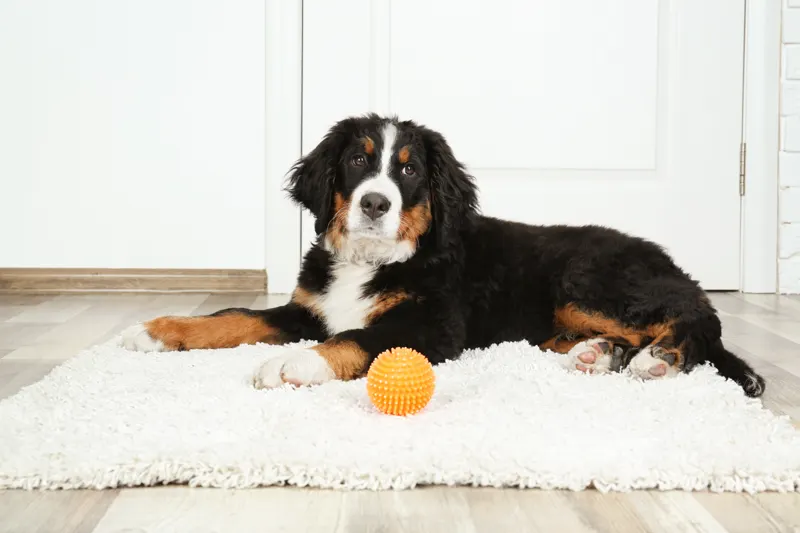
Some dogs cope fine. Others get anxious, and it can start within minutes of you leaving. Watch for:
- Barking, howling or whining after you leave
- Accidents in the house from a dog that's normally trained
- Chewing door frames, window sills or your things
- Pacing, panting or drooling
- Trying to escape
- Over-the-top greetings when you get home
A cheap pet camera or a phone recording can show you what really happens while you're gone.
How to make time alone easier
- Exercise first. A good walk and a small meal before you leave help your dog settle.
- Leave something to do. A food-stuffed toy saved just for alone time keeps them busy.
- Fresh water, always. Leave more than one bowl in case one gets knocked over.
- Keep the temperature comfortable. Dogs can show signs of overheating in the low to mid 80s °F.
- Keep goodbyes low-key. Calm exits and calm returns make alone time feel normal.
- Build up slowly. Start with short absences and stretch them out over time.
When to call in a dog walker or sitter
If your day regularly runs past 4 to 6 hours, a midday walk or drop-in is the easiest fix. It breaks up the day, gives your dog a potty break and gives you peace of mind. Curious about cost? See how much to pay a dog sitter.
Overnight is a different story. Leaving a dog alone all night goes far past every guideline above, so book a sitter or a trusted friend instead.
Frequently asked questions
Can I leave my dog alone for 8 hours?
It's at the very top of what experts allow. The AKC says 6 to 8 hours without a potty break is the maximum, while UK welfare groups recommend no more than about 4 hours. A midday walk or drop-in is the better plan for long workdays.
How long can a puppy be left alone?
About 1 hour per month of age from 3 months on, per the AKC. Puppies younger than that may need a break every 1 to 2 hours.
Is it okay to leave a dog alone overnight?
It goes well past standard guidance, and dogs with separation anxiety struggle most. Arrange a sitter or a friend to stay over or visit instead.
How do I know if my dog has separation anxiety?
Common signs include barking or howling after you leave, accidents indoors, destructive chewing near doors and windows, pacing, drooling and trying to escape. Talk to your vet if you see them.
Sources
- RSPCA: Leaving your dog alone
- PDSA: Home alone and separation anxiety
- Blue Cross: Home alone and separation anxiety in dogs
- Dogs Trust: Time alone
- AKC: How much alone time is too much for dogs?
- AKC: How long can you leave a puppy alone?
- VCA: House soiling in dogs
- Humane World for Animals: Crate training 101
- ASPCA: Separation anxiety
- AKC: Temperature settings for dogs
This guide is general information, not veterinary advice. If you're worried about your pet, call your vet.
Keep reading
How much to pay a dog sitter in 2026
How much to pay a dog sitter in 2026: average rates for drop-ins, walks, overnights and boarding, cat sitter prices, extra fees and how much to tip.
The pet sitter checklist: 25 things to leave your sitter
A printable pet sitter checklist for dogs and cats: feeding, meds, routines, emergency contacts and house notes. What to leave your sitter before you go.

How long can a cat be left alone?
How long can a cat be left alone? Expert guidance for adult cats, kittens and seniors, why daily check-ins matter, and what to do when you travel.